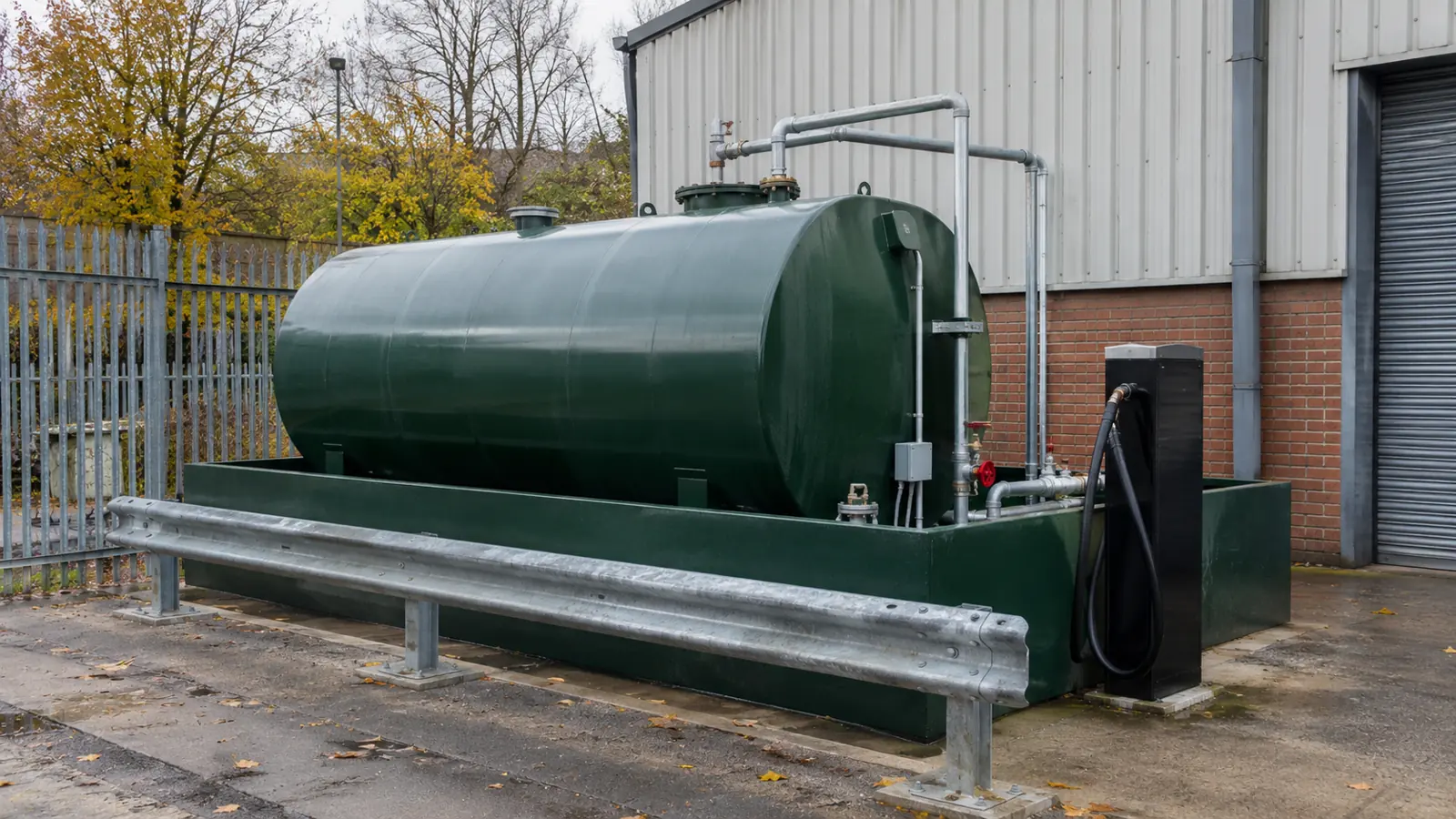
Fuel tank services in Leeds.
When the tank changes, the site still has a job to do. Removal, cleaning and fuel care for commercial premises with more than one moving part.
Discuss Your SiteThe Tank. The Fuel.
The Next Step.
A redundant tank in a basement calls for a different approach from stored diesel supporting a standby generator. Our service guides explain those differences so you can scope the work before committing to a method.
Explore the six services below, then tell us what the installation supplies and what you want to change. Your enquiry can be shared with a suitable service provider with your agreement.
Fuel Tank Removal
Whole-lift and sectional removal options, with preparation, access and the cleared area defined.
Read The GuideTank Cleaning
Deposits, sludge and water removed as part of a planned shutdown and return to service.
Read The GuideTank Decommissioning
Permanent or temporary closure assessed against the tank’s condition and the future site use.
Read The GuideGenerator Removal
Redundant standby plant considered alongside electrical handover, liquids and lifting access.
Read The GuideTank Foam Filling
Permanent filling where a tank must remain, following preparation and a future-use assessment.
Read The GuideFuel Polishing
Stored fuel assessed for filtration, water separation and any supporting tank cleaning.
Read The Guide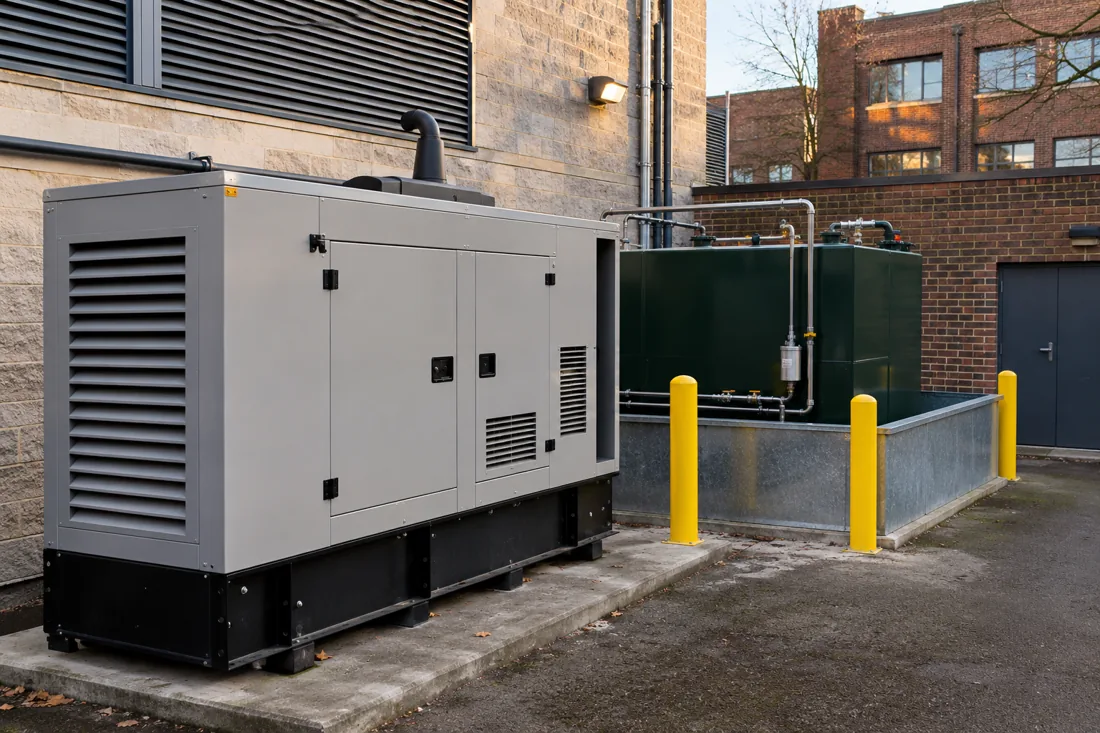
Take Out The Old.
Keep Sight Of The Live.
A commercial fuel installation rarely stands alone. The same storage area can sit beside live plant, shared delivery space and occupied units. Before a removal date is agreed, the supply lines and the site’s operating limits need to be understood.
For a phased replacement, the new supply may need to be accepted before the old tank is closed. Temporary storage can be considered where suitable, with containment, connection changes and the available space assessed together.
Tell us the permitted outage, critical loads and any dates the site cannot lose backup provision. Fuel continuity is a programme decision that involves the responsible people for the whole system.
Understand Tank DecommissioningA Useful Enquiry Starts Before A Quote.
You do not need to choose a cutting method or know how a tank will be cleaned. Start with the outcome: clear a plant room, keep a generator supplied, recover usable fuel or close a buried tank permanently.
Any uncertainty about old connections, tank contents or access should be raised early. An initial description helps identify what a site assessment needs to resolve.
- Describe The InstallationCapacity, fuel type, location and what it serves.
- Show The ConstraintsAccess route, vehicle position, live plant and working hours.
- Agree The End PointRetained fuel, shutdown boundaries, final condition and records.
Leeds Has More Than One Kind Of Site.
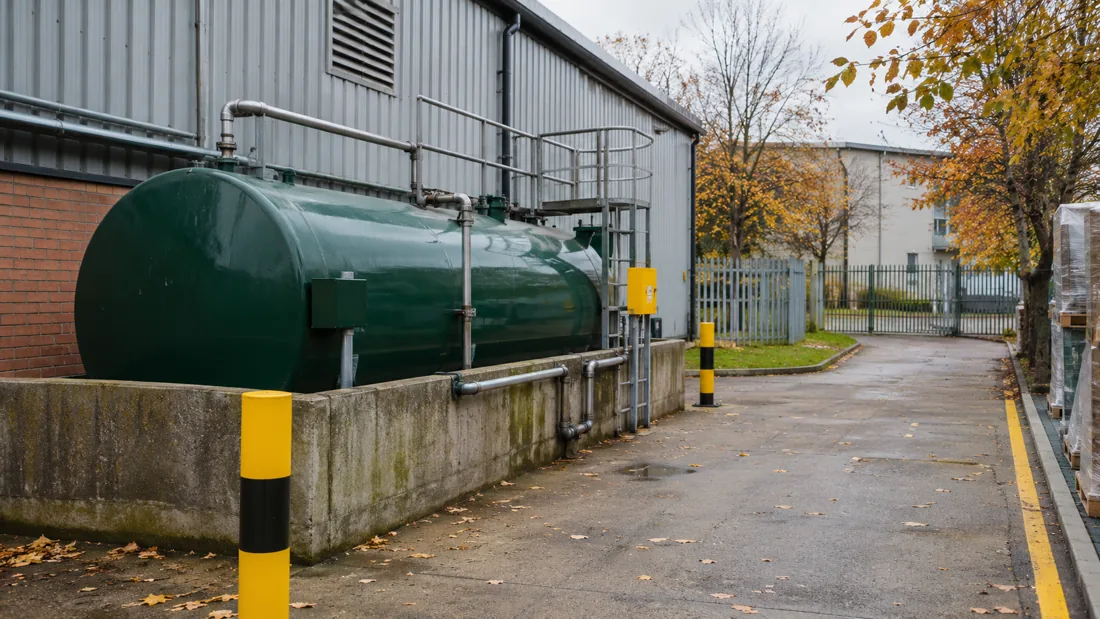
Commercial tank work can mean an enclosed city plant room, a shared yard or storage on the district’s rural edge. The access survey needs the route from the road as well as the tank itself.
Along the Aire corridor, the council’s flood scheme material highlights the importance of local flood context. Where a tank is near drains or water, raise the drainage layout and any history of flooding when the work is assessed.
Our coverage guide includes Armley, Kirkstall, Calverley, Horsforth, Pudsey, Morley, Otley, Yeadon, Wetherby and the eastern villages. Send the exact postcode so the location and access can be considered.
Read The Leeds Coverage GuideBefore You Send
The Site Details.
Keep existing inspection reports, fuel records and photographs together. Leave tank openings, electrical isolation and pipe disconnection to the competent people appointed to the work.
Can tank work be phased around our operations?
Commercial tank work can sometimes be phased where the installation and available space allow it. The assessment needs to identify every connected load, the permitted shutdown and any temporary fuel arrangement. Tell us what must stay available, as a tank appearing redundant may still support heating or standby generation.
What should we send for an initial assessment?
An initial tank assessment starts with your postcode, capacity, contents, approximate fuel level and the desired outcome. Photographs of the tank and the full access route help explain the constraints. Include any drawings or inspection findings you already hold, without opening covers or disconnecting anything to obtain more detail.
What Needs To Change At Your Site?
Tell us whether you are planning maintenance, replacing equipment or clearing redundant storage. Include what needs to stay in use and when the work could happen.
Remaining fuel is part of the job. Give an approximate quantity and mention any water, sludge or previous contamination so recovery and disposal can be considered at the same time.
After you send the form, the details can be shared with a suitable service provider to discuss the scope and next steps. No method or programme is confirmed by submitting an enquiry.