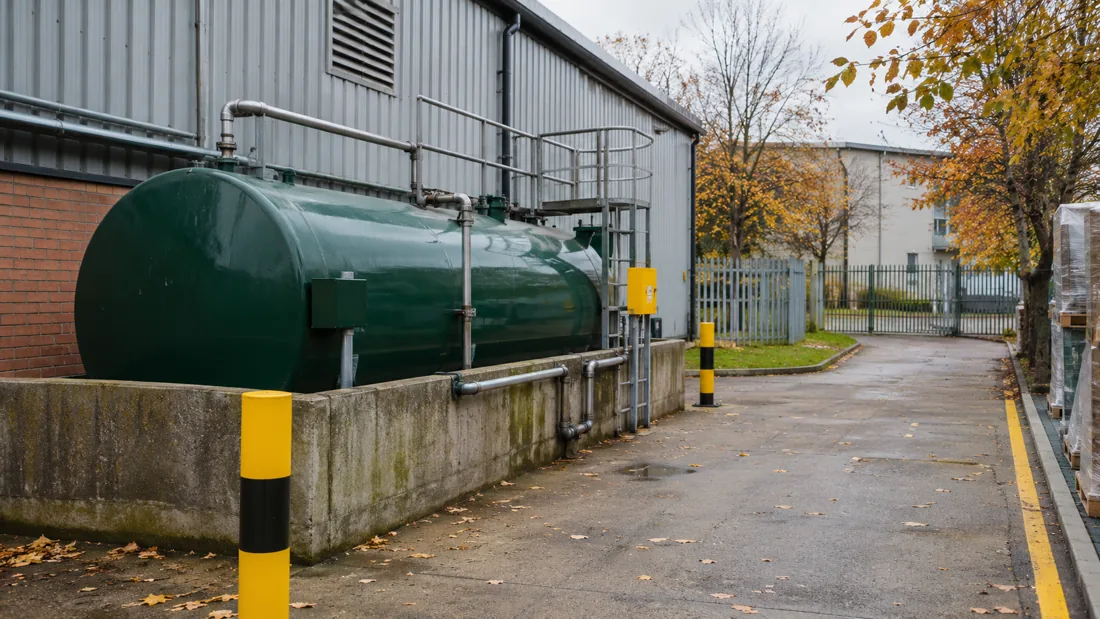
First Ask Why The Tank Must Stay
A buried tank beneath a busy yard or close to a structure may be difficult to remove without substantial disturbance. Filling in place can be considered when removal is impractical, but the reason needs to be assessed and documented. Restricted access alone does not settle every technical question.
The decision should include the future use of the area. A tank beneath proposed foundations, a changed traffic route or a new service trench creates different questions from one in an area remaining undisturbed. Share those plans before selecting a filling material.
Treat filling as permanent closure of the storage. If you may need fuel storage again, discuss a separate suitable tank arrangement. A filled tank should not be described in records as available for recommissioning or as physically removed.
A Practical Closure Comparison
| Option | Important Distinction |
|---|---|
| Excavate and remove | Takes the vessel out of the ground and allows access to the excavation, with disruption and reinstatement to assess. |
| Foam filling | Uses a specialist lightweight fill after preparation where leaving the vessel is acceptable. It is not a structural design for future loading. |
| Other assessed filling material | May suit a different closure objective, but delivery, weight, loading and ground conditions need technical review. |
The appropriate material depends on the tank and the wider works. A generic statement that foam supports a new slab or vehicle loading is not a substitute for engineering advice. If structural use is proposed, the project designer should confirm what is acceptable.
Filling Follows Cleaning
The remaining oil, water and sludge need to be recovered before filling. Cleaning removes residual contamination within the tank to the standard required for the work. The method also needs to address atmosphere hazards, connections and prevention of future unintended filling.
A low gauge reading is not proof that the tank is ready. Provide its last known contents, approximate remaining volume and any history of water ingress. Older underground tanks can contain substantial material below the usable outlet or beneath inspection points.
Preparation and filling should be described as separate stages in the method and quotation. This makes it clear how liquids will be handled and what happens if unexpected contamination is found. Foam should never be presented as a way to bypass the dirty or hazardous part of closure.
The Ground Outside Still Matters
Filling the internal space does not treat leaked fuel outside the vessel. Staining, persistent odour, unexplained product loss or an earlier spill can justify a separate environmental assessment. Send any relevant ground reports or insurer correspondence when requesting the survey.
For underground closure, agree the environmental risk assessment and soil and groundwater sampling strategy with a qualified environmental consultant. Permanent retention needs the relevant environmental regulator to be satisfied that pollution will not result.
On a redevelopment site, coordinate tank closure with the consultant responsible for ground conditions. Filling before investigation may make later access harder. The sequence should reflect the wider project rather than treating tank closure as an isolated item.
The completed record should distinguish what was observed from what was tested. A filling certificate describes the filling work. It does not establish that nearby soil or groundwater is uncontaminated, and should not be used as evidence of environmental remediation.
Information And Access For Assessment
Send the location, approximate dimensions and capacity, construction if known and the position of visible covers. Photograph the approach from the road, the tank area and any restricted gates or corridors. Include a plan showing where the tank sits relative to buildings and live services.
Equipment and recovered liquids need a workable route between the tank and the vehicle position. Hose distance, changes of level, shared access and safe equipment standing space can affect the method. Tell us if vehicle access is limited by a basement, archway or occupied yard.
Do not excavate, enter or open the tank to obtain better photographs. Existing plans and safely visible features are enough to start a conversation. Where capacity or internal arrangement is uncertain, the survey should resolve that uncertainty before a fill quantity is agreed.
What A Filling Quotation Should Explain
Cost depends on preparation as well as filling volume. Liquid recovery, residue removal, access arrangements, equipment mobilisation and the proposed material influence the price. Extra work may be needed if the tank’s condition or actual size differs from the available records.
Ask how the contractor will confirm the filling extent and record the material used. Define whether pipework removal, fill point changes, cover treatment and surface reinstatement are included. If another contractor controls groundworks, make the division of responsibilities explicit.
A low filling-only quotation may leave cleaning, waste collection or investigation outside the scope. Compare the full closure outcome rather than the cost of material alone. Future excavation plans can also change whether filling represents a sensible long-term choice.
Keep A Permanent Location Record
A useful completion pack records the tank location, capacity, previous contents, closure date, material and quantity used, together with the work completed. Include relevant waste records for the liquids removed. Keep the pack with the building and asset information for future occupiers and contractors.
Mark the retained tank accurately on site plans and disclose it when planning later groundworks. If removal becomes necessary, the contractor needs to know that the vessel contains filling material. Permanent closure should reduce uncertainty, rather than hide an installation from the next project.
Closure guidance: GOV.UK underground storage tank decommissioning.
Your Questions
Can foam filling replace tank removal?
Tank foam filling can be considered where a redundant vessel has to remain, subject to assessment of the tank and future site use. Removal should still be compared as an option. The right choice depends on access, ground conditions, nearby structures and whether future building work would need the tank area.
Does tank foam filling make the ground load-bearing?
Tank foam filling should not be treated as proof that the ground can support new vehicle loads or foundations. Those loads need assessment by the project’s designer or engineer. Provide the proposed use of the area before choosing a closure material, particularly where a slab, roadway or building is planned.