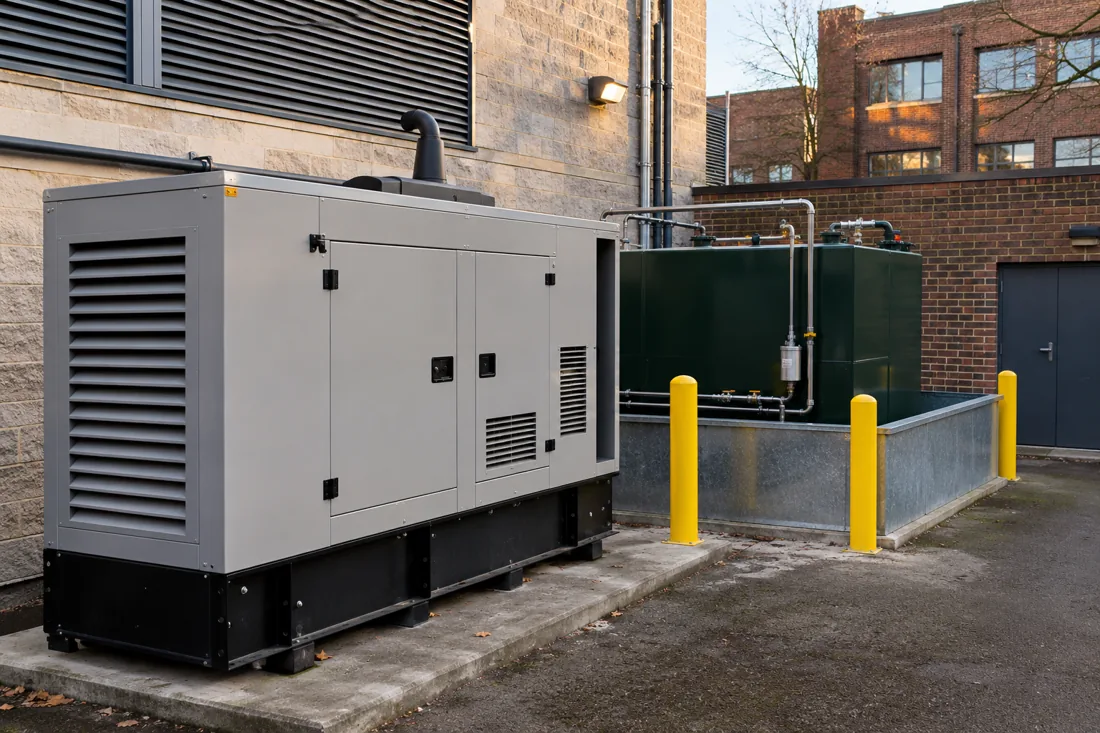
Confirm The Generator Is Redundant
A generator can be unused for months and still form part of a building’s essential backup. Before removal, establish what it supports and who can authorise the loss of that support. An estate manager’s instruction, electrical changeover plan and tenant requirements need to agree.
For a replacement project, the old unit may need to remain available until the new system has passed the agreed commissioning and acceptance checks. For a building leaving service, the electrical and fuel systems may be closed permanently. These are different programmes with different handover responsibilities.
Tell us if the equipment is to be relocated, assessed for reuse or sent for recovery and disposal. Preserving a unit for reuse affects handling, identification and transport. Do not assume a scrap-led removal is suitable when another site expects to receive an operational generator.
Choose The Removal Scope
| Project | Planning Priority |
|---|---|
| Replace an existing standby unit | Acceptance of the new backup arrangement before removal of the old one. |
| Clear a redundant plant room | Electrical disconnection boundary, fuel system closure and the carrying route. |
| Move equipment for potential reuse | Confirmed dimensions, condition, lifting information and receiving-site requirements. |
The scope should state whether it includes the acoustic enclosure, exhaust, cooling arrangements, fuel tank, batteries and associated cabling. Building penetrations, concrete plinths and reinstatement may need other trades. A generator disappearing from the room does not complete those associated works automatically.
Set An Electrical Handover Boundary
Electrical isolation and disconnection must be undertaken by competent personnel under the site’s safe procedures. Removal planning needs confirmation of that handover before mechanical handling starts. This page is not a guide to disconnecting a live generator or changing a switchboard.
The installation may include automatic starting controls, chargers and auxiliary supplies as well as the main power connection. Tell the appointed electrical contractor about the full arrangement and any replacement works. Unknown cables and unverified supplies should be resolved before a removal date is fixed.
For occupied commercial premises, agree how staff are told about the work and which areas need exclusion. Changes to backup provision should also reach the people responsible for business continuity. The removal contractor needs a clear site contact with authority to accept the work boundary.
Include The Fuel System
Some generators have an integral or sub-base tank, while others are supplied from a separate bulk tank and transfer arrangement. Photograph both the set and any remote tank. Show visible fuel lines and provide drawings where available.
Remaining fuel, lubricating oil and coolant affect handling and disposal. The plan should distinguish recoverable product from waste and keep incompatible streams separate. A unit described as empty can still contain liquids that need controlled recovery before transport.
If a bulk tank is staying to supply other equipment, confirm how its redundant branches will be isolated and recorded. If the tank is also going, use the linked fuel tank removal guide to define that work. Temporary fuel or backup arrangements require their own assessment and agreement.
Measure The Equipment And The Exit
A generator’s rated electrical output does not tell a lifting planner its weight or dimensions. Send the make, model and readable nameplate information, plus manufacturer handling details if available. Include the enclosure and anything projecting beyond the main frame.
Photograph the route from the installed position to the collection vehicle. Door widths, corners, steps, gradients and floor loading can decide whether machinery moving equipment or a crane is appropriate. An enclosure removable in sections may still leave a heavy engine and alternator assembly.
Outside, show the proposed vehicle position, overhead cables and nearby public or delivery routes. Lifting arrangements need competent planning, supervision and suitable equipment under LOLER 1998. Ground conditions and the available space are part of that decision, rather than details left until arrival.
What Determines The Removal Cost?
Weight, access and the handling method are major drivers. Electrical attendance, fuel recovery, liquid disposal, crane arrangements and the removal of connected components can add separate allowances. Limited work hours or a sensitive occupied site can change the labour and sequencing.
Ask whether quoted recovery value depends on inspection, a confirmed reuse route or a specific equipment condition. Avoid treating any assumed resale value as guaranteed. The commercial offer should explain the ownership transfer and what happens if the unit cannot be accepted in its expected condition.
Close The Asset Record
The handover should identify the generator removed and the destination or route agreed for it. Record the condition of retained services, items left behind and any outstanding reinstatement. If a replacement is taking over, its commissioning evidence belongs with the new installation.
Different materials may need different waste records, including batteries and removed liquids where applicable. Agree the documentation list for the actual scope. Retain the electrical handover and plant removal record together so future maintenance teams can understand the change.
Handling reference: HSE planning and organising lifting operations.
Your Questions
Can a generator be removed from inside a building?
Indoor generator removal depends on the size and weight of the equipment and the route to the collection point. Plant rooms may need staged dismantling or specialist machinery handling. Send photographs of doors, corners, stairs and the surrounding plant, along with model details, before assuming a whole-unit lift is possible.
Can our backup power stay available during replacement?
Backup power availability during generator replacement depends on the electrical programme and any temporary provision. The old set may remain until the replacement is accepted, or a separate temporary arrangement may be needed. Tell us the loads, permitted outage and resilience requirements so the relevant contractors can assess a coordinated sequence.